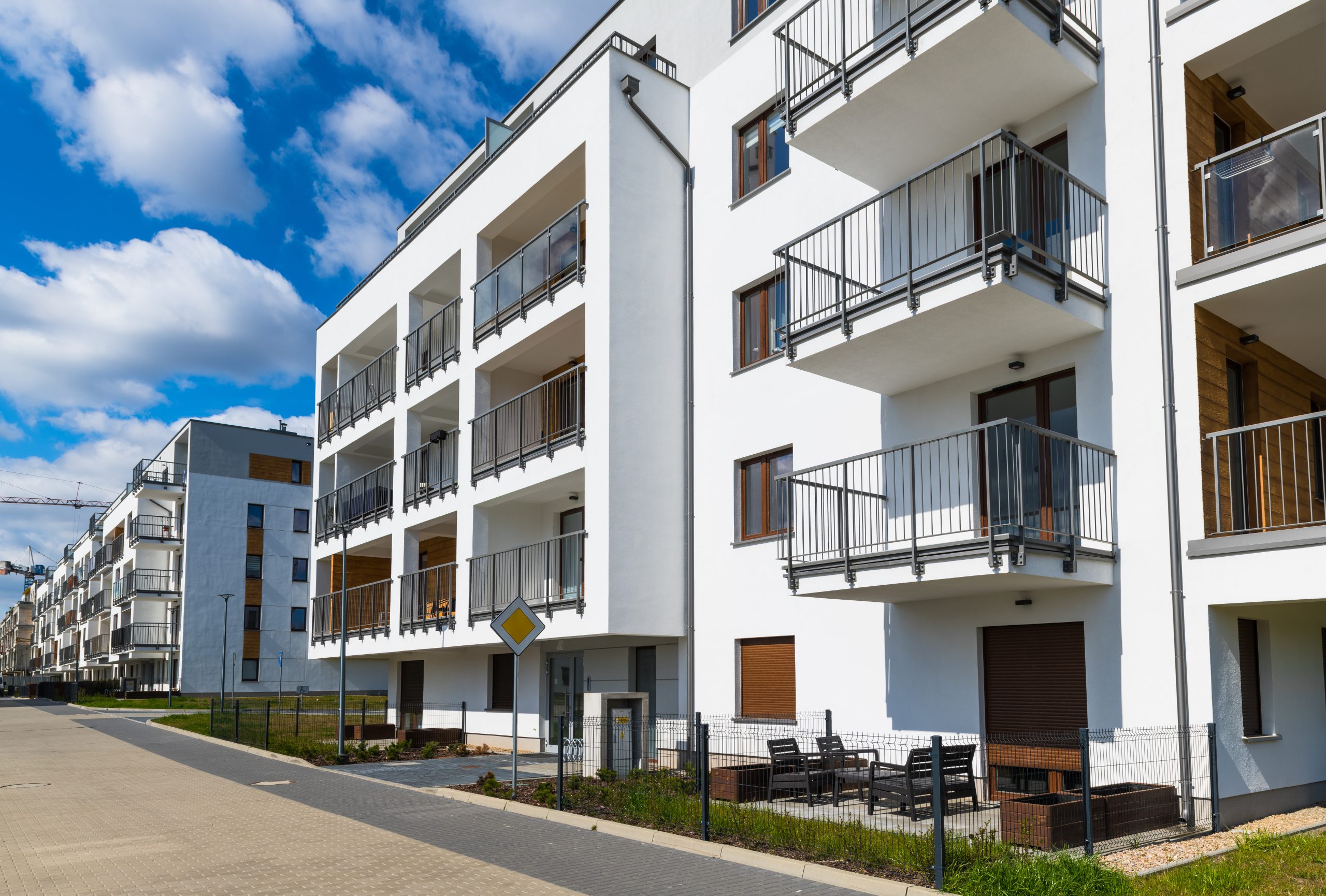

If you own or manage a residential block of at least 5 storeys, or at least 11 metres tall, in England, the
Building Safety Act 2022 remediation regime applies to you. Two enforcement tools sit at its centre:
Remediation Orders, which compel a freeholder to carry out works and Remediation Contribution Orders,
which determine who pays for them. Both are made by the First-tier Tribunal (Property Chamber), and both can be sought against you, or by you.
Which buildings are in scope?
A ‘relevant building’ under section 117 is a self-contained building, or self-contained part of a building, in
England, with at least 2 dwellings, that is at least 11 metres high or has at least 5 storeys. Four categories are excluded under s117(3), which are buildings where a Landlord and Tenant Act 1987 right of first refusal or compulsory acquisition has been exercised; buildings where collective enfranchisement has been completed; leaseholder-owned freeholds; and commonhold land. Everything else that meets the height or storey threshold is considered a ‘relevant building’.
What is a relevant defect?
A relevant defect under section 120 is a defect arising from works carried out in the 30-year period before section 120 came into force on 28 June 2022. Therefore, anything going back to 28 June 1992 is potentially within scope. The defect must create a building safety risk, a risk from fire or the collapse of the building. Combustible cladding systems, missing fire stops, defective compartmentalisation, and faulty fire doors are amongst the most common defects. One further point for consideration in relation to section 120(3)(c) is that badly executed remediation carried out after 28 June 2022 can also create a fresh relevant defect. The regime isn’t limited to original construction failures.
Remediation Orders and Remediation Contribution Orders
A Remediation Order (RO) under section 123 requires the relevant freeholder to remedy specified defects by a date set in the order. The relevant freeholder is a freeholder who has a legal obligation to repair or maintain something connected to the defect. A full repairing covenant or a statutory maintenance obligation would both qualify. Anyone can apply for an RO, including leaseholders, RTM companies, the Building Safety Regulator, local authorities, and fire and rescue authorities, with ROs being enforceable through the county court.
A Remediation Contribution Order (RCO) under section 124 works differently. Rather than compelling
someone to act, it requires a corporate body or partnership to fund remediation. The FTT makes an RCO
where it considers it just and equitable to do so. The Court of Appeal confirmed in Triathlon Homes LLP v
Stratford Village Development Partnership that the test can be met even where the
relevant works predate the Act. That guidance is now final, as the Supreme Court has previously granted permission to appeal on retrospectivity only and refused it on the just and equitable ground. However, there is a linked appeal on Schedule 8 paragraph 9 currently pending (Adriatic Land v Hippersley Point).
The list of possible RCO respondents is longer than for an RO. It includes the current freeholder, any person who was a freeholder at the qualifying time (14 February 2022), the original developer, persons associated with any of those parties (group companies, parent companies, subsidiaries), and the Secretary of State under s124(5)(a). Corporate restructuring since the original development doesn’t automatically put a successor entity out of reach.
Schedule 8: who actually pays?
Schedule 8 blocks specified remediation costs from being charged to qualifying leaseholders through the
service charge. A qualifying lease is a long lease (originally over 21 years) granted before 14 February 2022, where the leaseholder was liable to a service charge. At the qualifying time, one of 3 conditions must also apply: the dwelling was their only or principal home; they owned no other UK dwelling (whether freehold or by long lease); or they owned no more than 2 other UK dwellings.
The protections operate at several levels. No leaseholder pays if the freeholder caused or is associated with the defect. No qualifying leaseholder pays if the freeholder group’s net worth exceeded £2m per relevant building it owned at the qualifying time. No qualifying leaseholder pays if their lease was valued below £325,000 in Greater London or £175,000 elsewhere. Two further protections apply regardless of any of those: under paragraph 8, cladding remediation costs cannot be charged to qualifying leaseholders under any circumstances; under paragraph 9, neither can legal or professional costs relating to the freeholder’s liability for a relevant defect (with a narrow LFRA 2024 exception for RTM or resident management companies pursuing an RCO).
For managing agents, before any service charge demand goes out that includes remediation-related costs, check the Schedule 8 position. Cladding remediation costs for qualifying leaseholders are never recoverable through the service charge. Getting this wrong creates demands that are invalid and may need to be refunded.
Landlord certificates
Where a freeholder wants to recover remediation costs through the service charge, they’ll need a correctly drafted and served landlord certificate demonstrating that Schedule 8 doesn’t block recovery. Serve it incorrectly, or miss the required timing, and service charge recovery is likely off the table. The certificates are complex to draft: they require detailed, accurate knowledge of the freeholder’s corporate structure and ownership history. We do suggest taking legal advice before any demand goes out.
What this looks like in practice
ROs and RCOs are relatively rare. Few have been granted nationwide since the Act came into force, with most BSA matters settled well before the FTT, however a contested case typically takes 18 months or more and costs a freeholder north of £100,000 in fees. That is partly why instruction volumes in this area are lower than you’d expect, with the Act barring freeholders from recovering their own legal advice costs on building safety matters through the service charge.
The cases worth pursuing to the FTT are those where a developer or associated entity can be identified, has the means to fund remediation, and isn’t engaging. Those are also the most front-loaded matters: every BSA case requires a fresh assessment of the specific building, its ownership history, and the precise legal position before a definitive view can even be formed. FTT proceedings of this nature will also require specialist counsel. If the criminal liability dimension adds pressure, for example because the fire brigade has served notice, the practical decision is often to carry out the works and preserve the cost recovery argument for later, rather than wait for the legal position to be resolved.
Taking the next step
If you have a relevant building with identified defects, a service charge challenge on BSA grounds, or notice of an RO or RCO application, we suggest you take specialist legal advice before responding. There are no standard answers in this area: every building and ownership structure is different. Getting the service charge position wrong creates refund exposure and FTT proceedings that are considerably more expensive to defend than the advice would have cost upfront.